The AI Pragmatist: April 2026
No hype. Just what happened in AI, what it means for business, and your next steps.
01
This Month in 60 Seconds
You are busy. Here is the whole issue in one paragraph, so you can decide whether to keep reading or forward it and move on.
- •Meta released TRIBE V2, the first foundation model to predict brain responses to visual, auditory, and textual stimuli. Today, it is a research artifact. In eighteen months, it is a creative-testing tool your agency will benchmark against.
- •Your team's AI assistant got worse with vague prompts. It was not a bug. Three labs all made the same training change in six months, and Anthropic published the first postmortem.
- •AI took 80% of all venture capital in Q1, the highest concentration ever recorded. Three infrastructure rounds raised a total of $9B. The model layer is becoming infrastructure rather than a differentiator.
- •A new study of 1.72M Polymarket accounts found just 3.14% qualify as skilled traders. The day before it published, the DOJ charged a US Army soldier with using classified information to bet.
If you read one section, make it The Lead.
02
The Lead
Meta shipped the first foundation model of human brain response.
Meta released a model that predicts how the human brain responds to media. The weights are public. The license bars commercial use today. It does not bar the research that will define what is possible tomorrow.
This is the first commercially relevant artifact at the intersection of AI and neuroscience. That intersection is where the next decade of consumer technology will be built.
TRIBE V2, released March 26, trained on 1,000+ hours of fMRI data from 720 subjects. Given media, the model predicts the average viewer's fMRI response. From Meta's research paper page: the model “accurately predicts high-resolution brain responses for novel stimuli, tasks, and subjects, superseding linear models.” The paper notes recovery of brain regions associated with emotional processing and syntax.
The license is CC-BY-NC-4.0: research and non-commercial only. The capability distinction also matters. TRIBE V2 predicts the brain's response to a stimulus. It does not read brains in real time.
What does this mean for the next eighteen months? A model that predicts brain response to media is, structurally, a creative-effectiveness pre-testing tool. The companies that figure this out first will not run more ads. They will run fewer, with higher predicted engagement, at lower production costs.
Executive assignments
- Marketing budget allocation. If creative testing becomes predictive, ROI changes. Budgets shift from in-market split-testing to fewer, validated assets.
- Compliance posture. Legal needs a position on neural data, including predicted neural data, before vendor calls start arriving.
- Brand exposure. Being on the first customer list for a TRIBE V2 successor becomes news. Early movers take press risk, later adopters gain tech after issues settle.
The non-commercial license slows the obvious productization. It does not slow the research lab a competitor will fund to demonstrate the use case.
03
What Broke
When the tool that just got you stopped getting you.
A year ago, AI assistants were novelties. Now they are infrastructure. This month, that infrastructure broke, and your engineering and ops leads noticed before the executive team did.
On April 23, Anthropic published what may be the first serious postmortem from a frontier AI lab on three Claude Code regressions from March to April; all have been reverted. The postmortem's significance is that it had to be written at all. Users had been complaining for weeks.
Anthropic's own migration guide explains the deeper shift: “Claude Opus 4.7 interprets prompts more literally than 4.6.” OpenAI shipped a parallel correction a year earlier. From their April 2025 sycophancy postmortem: the rolled-back update was “overly flattering or agreeable, often described as sycophantic.” All three labs moved from inferred intent toward literal compliance, and prompts written for the old behavior now produce flat output.
The change was deliberate. The trade-off has a name in the literature: the alignment tax. Each lab picked its point on that curve. Your team felt it.
Twelve months ago, you treated AI assistants as a productivity bonus: a nice-to-have, optional side tool. Today, your engineering org has workflows built around them. Your designers paste exemplars rather than write briefs. Your analysts assume “make this land” will produce something tasteful. None of that is contractually guaranteed. There is no model SLA. There is no migration window. There is no rollback button you control.
The user-side evidence is not anonymous. Stella Laurenzo, Senior Director of AMD's AI Group, filed a public GitHub issue on April 2 titled “Claude Code is unusable for complex engineering tasks.” Her conclusion: “Claude has regressed to the point it cannot be trusted to perform complex engineering.”
Model shifts will keep coming. Labs will keep changing alignment, and teams will keep noticing prompt drift. Short-term fix: tighten prompts by replacing adjectives with constraints, sending exemplars, and using forbidden lists. Long-term: assign someone to own model dependence before the next update breaks workflows.
04
Follow the Money
AI took 80% of Q1 2026 venture capital, the highest concentration ever recorded.
Crunchbase reported $300B in global venture funding in Q1, an all-time record; $242B went to AI. The previous high was 55% in Q1 2025.
Picks-and-shovels rounds
- Databricks: $5.0B equity raise on Feb 9, multi-investor.
- Nscale: $2.0B Series C on March 9, led by Aker ASA and 8090 Industries.
- Shield AI: $2.0B Series G plus preferred on March 26, led by Advent International.
Generative media and applications
- World Labs: $1.0B growth round on Feb 18.
- ElevenLabs: $500M Series D on Feb 4, led by Sequoia.
- Runway: $315M Series E on Feb 10, led by General Atlantic.
Three infrastructure rounds cleared $9 billion between them. Three application-layer rounds each cleared a quarter-billion. The Dallas Fed's 5-scenario AI/GDP projection through 2050 is the macro picture the venture market is pricing in.
For executives reading this: the practical question is whether AI is now infrastructure or a differentiator in your industry. Capital is voting infrastructure, which means your model-layer choice will look more like a cloud-provider choice in five years and less like the proprietary-software choice it looks like today.
Application-layer rounds require consumer scale or vertical lock-in. When evaluating vendors, ask what makes their data, integration, or knowledge unique. Without a clear answer, you are just paying for a dressed-up rental.
05
The Hype Check
The wisdom-of-crowds story does not survive the Polymarket data.
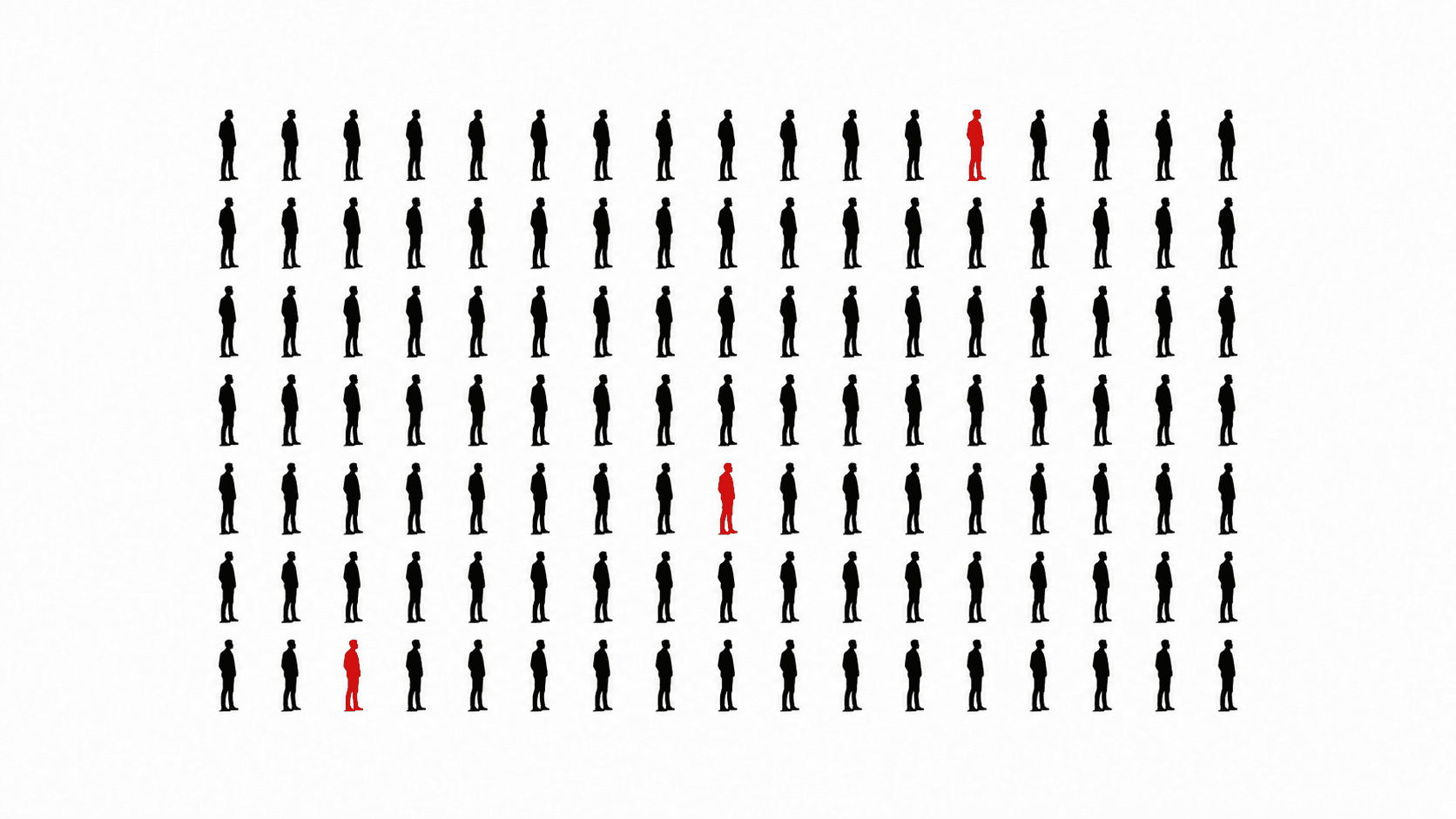
A new study of 1.72 million Polymarket accounts and $13.76 billion in trading volume found just 3.14% of traders qualify as skilled. The day before the paper went public, the DOJ charged a US Army soldier with using classified information to bet.
The claim: Prediction markets aggregate dispersed information better than experts because of the wisdom of crowds.
Evidence for: Markets do incorporate new information faster than polling on certain question types.
Evidence against: Gomez Cram, Guo, Kung, and Jensen, in Prediction Market Accuracy: Crowd Wisdom or Informed Minority?, write that accuracy is driven by a small minority of informed traders. Their trades, around 3% of all accounts, generate the bulk of price discovery.
The methodology: the authors reran each trader's bets 10,000 times with randomized direction to separate skill from luck. Only 12% of the biggest raw-profit winners cleared the benchmark. Around 60% of lucky winners became losers when tested on a separate event sample.
A separate paper by Mitts and Ofir, From Iran to Taylor Swift: Informed Trading in Prediction Markets, identified 210,000+ suspicious wallets with a 69.9% win rate, more than 60 standard deviations above random. Estimated informed-trader profits to date: $143 million.
The kicker. On April 23, the day before the Gomez-Cram paper went public, the DOJ charged SFC Gannon Ken Van Dyke of Fort Bragg with using classified information to profit on prediction-market bets.
Verdict: Overhyped. The markets aggregate information; they do not aggregate wisdom. They concentrate price discovery in a small minority that may not look anything like a crowd at all.
The next time you see a prediction-market price quoted at you, the relevant question is not “what does the price say?” It is “what does the 3% who set the price know that I do not?” Sometimes the answer will be domain expertise. Sometimes it will be classified information. The methodology cannot tell you which.
06
Quick Hits
Breaking: Powell stays on as Fed governor. At the April 29 FOMC press conference, Powell announced he will remain on the Board of Governors after his term as chair expires May 15. For executives: Fed-administration tension is now a structural feature, not a transitional one.
The Fed now has AI scenarios. The Dallas Fed published a 5-scenario GDP-per-capita projection through 2050. AI is no longer a sector trend; it is a macro variable.
March FOMC SEPraised the median 2026 GDP projection from 2.3% to 2.4%; Powell called the move “somewhat stronger than projected.” Watch the gap between Fed language and Wall Street commentary; it is a measure of how much AI optimism is institutional versus narrative.
CB Insights:266 AI M&A deals closed in Q1 2026, up 90% YoY. Vertical AI commanded the strongest multiples. If you are considering build, buy, or acquire on AI capability in 2026, vertical depth is what commands the premium.
If this was useful, forward it to someone who is tired of AI hype. That is the only growth strategy this newsletter has.